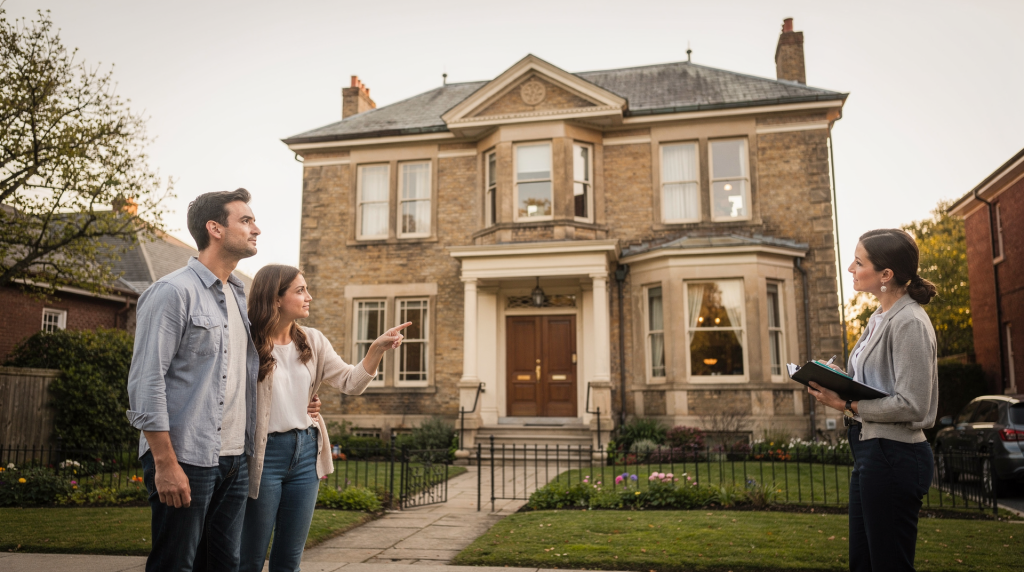
When you walk through a historic house for the first time, you are not just looking at rooms and finishes. You are looking at layers of decisions made by people who are no longer there to explain them. A sagging lintel, a patch of newer brick, a window that does not quite close — each one tells part of a story. The seller holds the rest of that story, or at least the most recent chapters. Asking the right questions before you commit can mean the difference between buying a house you understand and buying a collection of expensive mysteries.
Why seller questions matter in a historic home purchase
A historic house can present beautifully during a showing and still carry risks that newer construction simply does not. Electrical systems may have been spliced together across three different eras. Plumbing might run through channels cut into original floor joists. A roof replacement could have been done without permits, or a foundation issue might have been patched cosmetically rather than addressed structurally. Sellers almost always know more than what appears in the listing description, and in many cases, they have lived with the house long enough to understand its rhythms, its weak points, and the repairs they chose to make — or postpone. Your job as a buyer is to draw that knowledge out methodically, separating documented fact from optimistic recollection.
Start with the house’s history
Before you ask about the boiler or the roof, ask about the house itself. Understanding its timeline gives you a framework for evaluating everything else. A house built in 1840 that was substantially reworked in 1920 and again in 1985 carries three distinct sets of materials, methods, and problems. Knowing that sequence helps you interpret what you see.
Questions to ask
- When was the house built?
- Who owned it before you, and how long have you owned it?
- Are there any notable former owners, builders, or architects connected to the property?
- Is there documentation such as deeds, old listings, permits, surveys, or prior research on the home’s history?
- Has the house ever been designated as historic, individually listed, contributing to a district, or protected by an easement?
Why this matters
Designation status is not a ceremonial detail. It can dictate whether you need commission approval to replace windows, change exterior paint colors, or build an addition. A house that looks historic may have no legal protections at all, while a less visually striking property might sit within a tightly regulated local district. Easements add another layer: some run with the land in perpetuity and restrict alterations regardless of who owns the property. If the seller cannot answer these questions clearly, you will need to verify status through the local preservation office or State Historic Preservation Office before proceeding.
Ask what has been changed over time
No historic house survives unchanged. The question is whether the changes respected the building’s materials and construction logic, or whether they introduced new problems. A careful owner will have records. A less careful one will have vague recollections. Pay attention to the difference.
Questions to ask
- What major work has been done during your ownership?
- Which parts of the home are original, and which have been replaced?
- Were any additions, remodels, or repairs done with permits?
- Can you provide receipts, invoices, contractor names, and before-and-after photos?
- Were any previous repairs cosmetic, structural, or both?
What to look for
Focus your attention on the elements that define the house’s architectural character and that are most expensive to restore correctly:
- Windows
- Doors
- Plaster
- Trim and built-ins
- Flooring
- Staircases
- Masonry
- Roof details
- Porches and chimneys
When a seller says “the house was updated,” press for specifics. That word can describe a meticulous restoration using period-appropriate materials and techniques, or it can mean a quick cosmetic job that covered settlement cracks with fresh drywall and buried original wide-plank floors under engineered flooring. The distinction matters enormously for both value and future maintenance.
Check for hidden compromises in past renovations
Some of the most damaging work in historic houses was done with good intentions. Replacing original lime-based plaster with modern gypsum drywall changes how the wall assembly handles moisture. Covering wood siding with vinyl traps water and accelerates rot. Sealing old windows with caulk and storm panels can create condensation problems that destroy the sashes from the inside. These are not hypothetical scenarios — I have seen each one multiple times in the field, and the repairs are always more expensive than doing the work correctly the first time.
Ask directly
- Have any original materials been removed, capped, covered, or replaced?
- Were modern products used in place of traditional materials?
- Did any work affect plaster, masonry, windows, flooring, or trim?
- Were any repairs done after water, fire, termite, or structural damage?
- Did any contractor recommend additional work that was never completed?
Common warning signs
- Vinyl or aluminum covering old windows
- Drywall over plaster without a clear reason
- Fresh finishes hiding settlement cracks
- Patchwork electrical work
- New fixtures paired with visibly aging infrastructure
- Additions that do not match the original structure
If the seller cannot explain the work clearly — who did it, when, and why — assume you will need a specialist inspection. A good masonry contractor or preservation carpenter can often read the physical evidence even when the paper trail is thin, but that expertise costs money and time.
Ask about the major systems, not just the charm
The heartbreak in historic home purchases usually comes from systems, not aesthetics. A house can have exquisite original mantels and a boiler that is thirty years past its service life. The mantels will not keep you warm, and replacing that boiler may require upgrading the entire distribution system to meet current code. Budget accordingly.
Questions to ask
- When were the roof, boiler, furnace, HVAC, water heater, electrical panel, plumbing, and sewer line last replaced or repaired?
- Has the foundation ever been stabilized or underpinned?
- Are there active leaks, drainage issues, or recurring moisture problems?
- Has the home had chimney repairs or tuckpointing?
- Are any systems original, partially updated, or beyond expected service life?
Why this matters
A house with solid systems and modest finishes is almost always a better financial decision than a house with spectacular original details and failing infrastructure. For historic properties, I recommend buyers create two separate budgets: one for systems and structural work, and another for the character-defining features that drew them to the house in the first place. The systems budget usually needs to be funded first.
Ask about code, permits, and compliance
Historic homes sit at the intersection of multiple regulatory frameworks. Building codes, local preservation ordinances, zoning requirements, and easement terms can all constrain what you are allowed to do. Even if the house is not formally designated, unpermitted past work can become your legal and financial problem after closing.
Questions to ask
- Were all major alterations permitted?
- Are there open permits, stop-work issues, or code violations?
- Did any work require historic review or design approval?
- Are there restrictions from a preservation district, local board, or easement?
- Have any additions been inspected and signed off by the city or county?
Important nuance
Some properties fall under preservation rules that limit demolition, exterior changes, window replacement, or visible additions. Others may have zoning or neighborhood conservation overlay requirements that affect future plans even if the house itself is not officially protected. I have worked with buyers who assumed they could add a rear addition, only to discover that the local historic district commission reviews all visible changes from the public right-of-way. Verify the rules before you buy, not after.
Ask about environmental and health concerns
Older buildings frequently contain materials that are manageable with proper protocols but dangerous if disturbed without precautions. Lead paint, asbestos insulation, and vermiculite are common. The key is knowing about them before you start swinging a hammer.
Questions to ask
- Has anyone tested for lead paint or asbestos?
- Is there any known mold, rot, or past moisture intrusion?
- Has the property ever had underground fuel storage tanks?
- Are there signs of pests, termites, or carpenter damage?
- Has the house experienced flooding, fire, or storm damage?
Practical point
The seller may not be able to guarantee the absence of these issues, but they should disclose known problems and any past remediation work. If there has been a prior event — a basement flood, a small fire, a termite treatment — ask for documentation showing what was fixed, who did the work, and whether any monitoring or follow-up was recommended. Verbal assurances without paperwork are worth very little when you are the one holding the repair bill.
Ask about insurance and ongoing costs
Historic homes often cost more to insure because replacement requires specialty materials and skilled tradespeople who charge accordingly. A standard homeowner’s policy may not adequately cover a house with custom millwork, hand-blown glass, or a slate roof. Understanding the current owner’s insurance situation gives you a realistic baseline.
Questions to ask
- Who currently insures the property?
- Have there been claims related to water, fire, wind, or structural damage?
- Are there special requirements from the insurer about coverage limits or replacement cost?
- What are the average utility bills in summer and winter?
- Which repairs or maintenance tasks are the most expensive year to year?
Why this matters
A seller’s utility bills and insurance history reveal how the house actually performs. A beautiful old home with single-glazed windows, minimal insulation, and an aging heating system may be comfortable only at a steep monthly cost. Those ongoing expenses should factor into your purchase decision just as much as the sale price.
Ask what maintenance is coming next
Every historic house has a to-do list, whether the owner admits it or not. A seller who has lived in the property for years knows which tasks they have been deferring and which contractors have warned them about upcoming needs. That information is gold for a buyer trying to plan the first few years of ownership.
Questions to ask
- What repairs do you think are needed soon?
- What work have you postponed?
- Which items have been patched rather than fully replaced?
- What do your contractors say should be monitored?
- What would you fix if you were staying another five years?
Simple rule
If the seller says, “Nothing needs attention,” be cautious. In fifteen years of working with historic properties, I have never encountered an older home that required zero maintenance in the near term. A good seller usually knows exactly what is next on the list and will share that information willingly. A seller who claims otherwise is either uninformed or not being straightforward.
Questions to ask in person or through your agent
Use this table as a practical reference during showings, follow-up calls, or document review. Each category addresses a specific risk area that matters for historic properties.
| Topic | Questions to ask | Why it matters |
|---|---|---|
| Age and provenance | When was it built? Who owned it before? Any documentation? | Helps verify historical significance and context. |
| Alterations | What changed, when, and by whom? | Reveals quality of past work and possible hidden issues. |
| Permits | Were additions and repairs permitted? Any open violations? | Avoids legal and compliance problems. |
| Structure | Any foundation, roof, chimney, or drainage issues? | These are among the costliest repairs. |
| Systems | Electrical, plumbing, HVAC, sewer updates? | Old systems can become the biggest budget item. |
| Materials | What original features remain? | Original fabric affects both value and restoration strategy. |
| Health risks | Lead, asbestos, mold, pests, tanks? | Affects safety, financing, and repair planning. |
| Ongoing costs | Insurance, utilities, maintenance? | Helps estimate true ownership cost. |
| Future restrictions | Historic district, easement, review board? | Impacts what you can change later. |
Red flags that deserve a deeper look
Certain phrases come up repeatedly in conversations with sellers, and experience has taught me to treat them as prompts for further investigation rather than satisfactory answers. None of these automatically disqualifies a property, but each one signals that the seller is offering a partial or uncertain picture.
- “We’re not sure when that was done.”
- “It was updated before we bought it.”
- “There were no permits, but it looks fine.”
- “The seller said it was fixed.”
- “That crack has always been there.”
- “The windows are original, but they stick a little.”
- “The basement only gets wet sometimes.”
When you hear these, follow up with specific requests for documentation, contractor contact information, or permission to bring in a specialist for a closer look. A seller who is confident in the house’s condition will not object to reasonable due diligence.
What to request before making an offer
If you are serious about a property, gather documents before you commit financially. The more paper the seller can produce, the easier it is to separate genuine preservation from guesswork and cosmetic cover-ups.
Ask for copies of
- Property disclosures
- Permit records
- Repair invoices
- Contractor reports
- Preservation review approvals
- Insurance claim history if available
- Pest or moisture reports
- Past inspection reports
- Any research on the house’s history or designation status
A thick file of documentation is a good sign. It means previous owners took the house seriously and made decisions with some level of care. A thin file does not necessarily mean the house is in poor condition, but it does mean you will need to do more investigative work on your own.
How to use the seller’s answers
The seller’s responses are a starting point, not a conclusion. Use them to direct your own verification process. Even the most honest seller may not know about a slow leak inside a wall cavity or the deteriorating condition of mortar joints high on a chimney.
Your next actions should include
- A general home inspection by someone familiar with older construction
- A specialist inspection if the house has obvious age-related concerns — masonry, roofing, foundation, or timber framing
- A roof, chimney, foundation, or masonry assessment when needed
- A review of permits and local historic restrictions through the appropriate municipal offices
- An insurance quote before you finalize the purchase, so you know what coverage will actually cost
Historic homes reward careful buyers. The goal is not to talk yourself out of a purchase, but to understand exactly what you are buying so that you can plan realistically and avoid surprises that strain your budget and your patience.
A simple step-by-step approach
- Ask for the property’s basic history and designation status.
- Review all major repairs, renovations, and permits.
- Identify which original features remain and which were replaced.
- Check the condition of systems, structure, and exterior envelope.
- Ask about known hazards, insurance, and maintenance costs.
- Verify everything with inspections and records before closing.
FAQ
Is it rude to ask the seller so many questions?
No. For a historic home, these are standard due diligence questions. Serious sellers usually expect them and have prepared answers. A seller who seems irritated by reasonable inquiries may be signaling that they are not fully transparent about the property’s condition.
What if the seller does not know the answers?
That is common, especially with older houses that have passed through multiple owners. Gaps in knowledge are not necessarily a problem, but they do mean you will need to do more independent verification. Ask for whatever documents exist, then fill in the blanks through inspections, permit records, and research at local archives or historical societies.
Should I avoid a historic home if permits are missing?
Not always. Many older homes have unpermitted work, particularly from eras when permitting requirements were less stringent or from owners who did the work themselves. But missing permits mean more risk, more investigation, and possibly more cost to bring things into compliance. Treat it as a pricing and negotiation issue, and factor the potential remediation cost into your offer.
What is the single most important question to ask?
Ask what has been changed, when, and by whom. That question often reveals the real condition of the house faster than any other, because it forces the seller to account for the building’s entire history of intervention rather than describing only its current appearance.
Do historic restrictions make a home impossible to alter?
No, but they can limit exterior changes, demolition, window replacement, and visible additions. Many historic commissions are reasonable and will work with owners on compatible alterations, but the process takes time and requires preparation. Always confirm the exact rules and review procedures before you buy, so you know what you are signing up for.
Final thought
A historic home should come with clarity, not confusion. The best seller questions are the ones that uncover what the house has survived, what has already been repaired, and what you will inherit after closing. Every old house has a history — your job is to learn enough of it before you sign that you can take ownership with clear eyes and a realistic plan. Ask carefully now, and you will spend fewer nights wondering what you missed.