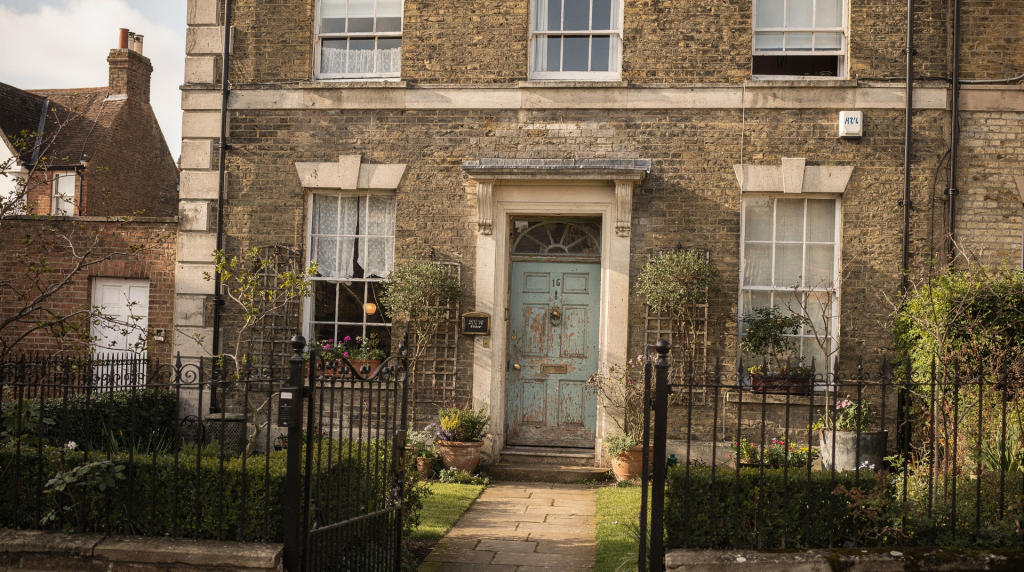
Historic property listings do more than market a home. Done well, they reveal how a house was built, who shaped it, what changed over time, and why those details still matter today. For buyers, owners, and preservation-minded readers, the best listing is not just a sales pitch—it is a compact piece of architectural history.
Why a Historic Listing Is More Than a Price Tag
A standard real estate listing usually focuses on square footage, bedroom count, updates, and location. A historic property listing has a second job: it has to explain significance. That means it should help readers understand the building as a record of craft, use, and change.
After fifteen years of walking through old houses—measuring joist spacing in damp cellars, tracing ghost marks of removed mantels on plaster, and cross-referencing deeds with physical evidence—I’ve learned that the gap between a generic listing and a historically literate one is the difference between seeing a house and reading it. A strong historic listing answers questions like:
- When was the house built?
- What style or building tradition does it belong to?
- Which original features survive?
- What changes are original to the house’s own evolution?
- Who lived there, and what do those people tell us about the property?
- What kind of care will the house need next?
That context changes how people read the home. A worn floorboard stops looking like a flaw and starts looking like evidence. A later addition is no longer just “extra space”; it may be a useful chapter in the building’s life. That shift in perspective is the real value of historic property listings. When a listing notes that the wide pine boards on the second floor show circular saw marks consistent with up-and-down sash mills common before 1850, the buyer stops seeing a scratched floor and starts seeing a date stamp in wood.
What Makes a Historic Property Listing Useful
The most useful listings balance three things:
- Facts: dates, materials, style, ownership, alterations
- Interpretation: what those facts mean architecturally and historically
- Practical guidance: what a buyer or owner should inspect next
A listing becomes more credible when it avoids vague language like “full of character” and replaces it with specifics. I’ve seen too many listings where “original details throughout” actually meant two surviving door casings and a replaced mantel. Precision protects both the buyer and the building. A useful listing might read:
- Wood-frame farmhouse, c. 1880
- Original double-hung sash windows
- Federal-style central passage plan
- Later rear ell added in the 1920s
- Surviving plaster walls, wide pine floors, and original staircase
That level of detail helps readers picture the house’s development instead of just its appearance. It also tells a preservation-minded buyer where to look first: those double-hung sash windows likely have original weights and pulleys that may need re-roping, and the plaster walls probably contain hair binder typical of the period, which affects repair decisions.
The House Story Hidden in a Listing
A good historic listing usually tells a story in layers. When I research a property, I work from the ground up—literally. Foundation stones tell one story, roof framing another, and the layers of wallpaper trapped behind a modern switch plate yet another.
1. The original structure
This is the house as first built: the massing, plan, materials, and workmanship. The original structure reveals what was available locally, what was fashionable, and what the builder valued. A fieldstone foundation with hand-hewn sills and mortise-and-tenon joinery speaks to a builder working with local materials and pre-industrial methods. A brick foundation with machine-cut lumber and wire nails points to a later period and rail-shipped materials.
Look for:
- Foundation type
- Roof form
- Window pattern
- Framing method
- Masonry or siding materials
- Floor plan layout
These details often say more than the decorative features. A plain farmhouse with intact proportions may be more historically telling than a heavily altered showpiece. The five-bay, center-hall plan of a Federal-era house isn’t just a layout—it’s a social diagram of how the original family organized public and private life, with formal parlors on one side and service spaces on the other.
2. The phases of change
Most old houses are not frozen in time. They were expanded, modernized, repaired, and adapted as families changed. Those changes can be just as important as the original build. I’ve documented houses where a 1920s kitchen addition tells the story of a family taking in boarders during the Depression, or where a shifted stairway marks the moment a house was divided into apartments during wartime housing shortages.
Common later layers include:
- New porches
- Rear additions
- Updated kitchens and bathrooms
- Replaced windows
- Shifted entries or stairways
- Electrical, plumbing, or heating upgrades
The key is not whether a change exists, but whether the change makes sense in the building’s history. A 1910 kitchen ell on an 1840 house may be a useful historic layer—it shows how the house adapted to new ideas about sanitation and food preparation. A recent synthetic porch with vinyl railings, on the other hand, may disrupt the original form and introduce materials that trap moisture against historic siding.
3. The people who lived there
Ownership history gives the house social context. Who bought it, who inherited it, who rented it, and who maintained it all matter. Deed research often reveals patterns invisible from the street: a house that passed from father to daughter in 1873, suggesting a family with unusual property arrangements; a house owned by a succession of single women running a boarding house; a house that stayed in one family for six generations, accumulating layers of careful, incremental change rather than sweeping renovations.
Ownership stories can reveal:
- Long family occupation
- Shifts in neighborhood status
- Local trades, industries, or migration patterns
- Changing household sizes and uses
- Women’s property ownership, inheritance, or estate transfers
Even if a listing cannot trace every owner, it should try to identify the most meaningful chapters. A house associated with a mill family, a schoolteacher, or a longtime craftsperson has a stronger human story than an anonymous date stamp. That story isn’t just charming—it’s data about how the building was used, maintained, and valued over time.
What to Include in a House History Section
If a listing site adds a House History section, it should do more than repeat what is already in the sales copy. It should add depth and context. The best House History sections I’ve read cite their sources—a specific deed book and page number, a Sanborn map date, a reference to a local history published in 1903—so that the next researcher can verify and build on the work.
Essential elements
| Element | What to include | Why it matters |
|---|---|---|
| Construction date | Approximate build year and evidence used | Establishes period and likely building methods |
| Architectural style | Style name or local vernacular type | Helps readers understand form and detail |
| Original materials | Wood, brick, stone, plaster, slate, etc. | Indicates craftsmanship and repair needs |
| Alterations | Additions, remodels, replacements | Shows how the house evolved |
| Ownership timeline | Notable owners or long-term residents | Connects the building to people and place |
| Historic significance | Local, architectural, or social importance | Explains why the house deserves attention |
| Condition notes | What survives, what is missing, what needs care | Helps buyers and owners assess next steps |
A House History section works best when it is concise, sourced, and honest about uncertainty. If the exact build date is unknown, say so and explain the evidence that points to a likely range—tax assessment jumps, map appearances, stylistic clues. That candor builds trust and invites further investigation.
How to Read a Listing Like a Preservationist
If you are looking at an older home, do not start with finishes. Start with the building’s bones. I’ve trained myself to walk through a house in a specific sequence: first the exterior massing and roof, then the foundation and sill, then the framing visible in the attic and basement, then the floor plan, and only then the finishes. This order keeps me from being distracted by a fresh coat of paint on a wall that’s hiding structural problems.
Step-by-step reading process
- Identify the likely period
- Look at roof shape, window proportions, siding, and plan.
- Compare those clues to common local styles and building traditions.
- Separate original fabric from later work
- Ask what appears to be original.
- Note what has been repaired, replaced, or added.
- Look for evidence of use
- Fireplaces, service wings, attic changes, cellar features, and stair placement can show how people lived.
- Check the maintenance story
- Water stains, mortar loss, rotted trim, and failed paint often matter more than cosmetic updates.
- Read for integrity, not perfection
- A house can be historically valuable even with changes.
- The question is whether it still communicates its period, form, and character.
Practical clue: the “story” is often in the imperfections
Old houses rarely tell their story through symmetry and polish. They tell it through patched plaster, mismatched hardware, enlarged openings, and reused materials. Those details can be clues to repairs, changing technology, or shifts in taste. A patch of plaster with a different texture and a slightly different color might mark where a stovepipe once entered a chimney—evidence of a heating upgrade in the 1880s. A row of filled holes on a baseboard could indicate where a long-removed partition once divided a room. These aren’t flaws to hide; they’re footnotes in the building’s biography.
Common Mistakes in Historic Listings
Many listings flatten a house’s history instead of clarifying it. I’ve collected a mental catalog of errors over the years, and they tend to fall into predictable patterns. Watch for these problems:
- Calling every old house “charming” without explaining what is significant
- Treating all updates as improvements, even when they removed historic fabric
- Describing a house as “original” when many key features have been replaced
- Ignoring later changes that are historically meaningful
- Failing to distinguish verified facts from educated guesses
- Listing style terms without explaining them in plain language
A weak listing turns history into decoration. A strong one treats history as evidence. The difference matters because a buyer who buys a house described as “original” and then discovers the windows are 1980s replacements, the floors are new pine stained to look old, and the mantels came from an architectural salvage yard has been misled—and the house has been misrepresented in a way that erases its actual story.
How to Write Better Historic Listings
If you are building a property site or editorial archive, the goal should be accuracy, clarity, and usefulness. The best listing writers I know keep a small library of local building histories, architectural guides, and preservation briefs within arm’s reach. They know that “circa 1840” means something different from “built in 1840,” and they use each phrase deliberately.
Best practices for listing copy
- Use dates carefully: say “circa” when exact dates are uncertain.
- Name features precisely: “double-hung sash windows” is better than “original windows.”
- Explain why a feature matters: not just what it is, but what it tells us.
- Separate observation from interpretation.
- Note uncertainty when records conflict.
- Include research sources where possible.
Better phrasing examples
| Weak listing language | Better listing language |
|---|---|
| Full of charm | Retains original millwork, stair details, and window proportions |
| Old-world character | Displays intact late-19th-century craftsmanship and layout |
| Tastefully updated | Modernized kitchen inserted without altering the main floor plan |
| Original home | Original core survives, with later rear additions and rebuilt porch |
That shift in language makes the listing more credible to serious readers. It also protects the seller and agent from claims of misrepresentation, and it gives the buyer a realistic foundation for planning future work.
What Buyers and Owners Should Verify
Historic listings are most valuable when they lead to better questions on-site. I always recommend that buyers walk through with a flashlight, a notebook, and a healthy skepticism. The listing is a starting point, not a final report.
Checklist before you trust the story
- Confirm approximate construction date through tax records, deeds, maps, or local archives.
- Ask which features are original and which are restored or replaced.
- Inspect windows, rooflines, masonry, and foundations for evidence of age and repair.
- Look for signs of moisture intrusion, especially around chimneys, sill plates, and additions.
- Check whether the property is locally designated, nationally registered, or part of a heritage district.
- Ask whether future work may require approvals or permits.
- Photograph details before starting any repairs.
This is especially important because older buildings often need repair-first thinking: maintain where you can, repair what is deteriorated, and replace only when necessary. A listing that accurately describes the condition of the original wood gutters, for example, might prompt a buyer to budget for repair and re-lining rather than replacement with aluminum—a decision that preserves historic fabric and often costs less in the long run.
Why Preservation Language Matters
The language used in a listing shapes decisions. If a house is described only as outdated, buyers may strip out original materials unnecessarily. If it is described too romantically, serious issues may get ignored. I’ve seen houses where a listing’s phrase “needs some TLC” masked $50,000 worth of structural repairs, and others where “dated kitchen” led a buyer to demolish original built-in cabinetry that could have been repaired and retained.
Balanced language helps people make better choices:
- Preserve what still works.
- Repair before replacing.
- Avoid conjectural “historic-looking” changes.
- Keep evidence of the building’s evolution when it has historical value.
That approach respects the house as a record, not a theme. It acknowledges that a 1950s bathroom with original tile and fixtures may be a legitimate part of the house’s story, even if it doesn’t match the 1880s construction date. The goal isn’t to freeze the house in one moment, but to understand and care for its whole timeline.
How This Fits a Better Editorial Model
For a site built around historic homes, listings should not stand alone. They work best as part of a broader editorial system. The most useful historic property sites I’ve studied treat each listing as one node in a larger network of information—connected to articles, guides, and case studies that deepen the reader’s understanding.
A strong model usually includes:
- Historic property listings with a House History section
- Journal articles on local homes, styles, and preservation basics
- Case studies showing real restoration decisions
- Interviews with owners, craftspeople, and preservationists
- Resource guides for maintenance, documentation, and regulations
This structure helps readers move from curiosity to action. A listing sparks interest. A journal piece explains context. A guide helps with next steps. Together, they create a useful archive instead of a static catalog. A reader who finds a Greek Revival farmhouse listing can follow links to an article on Greek Revival proportions in the region, a case study of a similar house’s window restoration, and a guide to researching rural property deeds—all within the same site, all reinforcing the same careful, evidence-based approach.
A Simple Formula for a Better Historic Listing
Use this formula when evaluating or writing a listing:
What it is + How it was built + What changed + Why it matters + What to do next
Example:
- A circa-1890 brick townhouse
- Italianate proportions with original stair and cornice work
- Later kitchen and bath updates
- Significant for its intact façade and interior joinery
- Worth documenting before any repair or redesign
That is enough to tell a real story without overloading the reader. It gives a buyer enough to decide whether to schedule a showing, and it gives a preservation-minded owner a framework for planning the next phase of the house’s life.
Conclusion
Historic property listings tell a house’s story when they move beyond sales language and start treating the building as evidence. The best listings explain architecture, trace ownership, record change, and point readers toward thoughtful care. When that happens, the listing becomes more than a snapshot of value—it becomes a readable history of the house itself. And that history, once written, stays with the house long after the sale closes, informing every future owner, every repair decision, and every layer of the building’s ongoing life.
FAQ
What makes a historic property listing different from a regular listing?
It explains architectural significance, material history, and ownership context, not just size, price, and finishes. A regular listing might note “3 bedrooms, 2 baths.” A historic listing explains that the third bedroom was originally a birthing room with its own small fireplace, and that the second bath occupies what was once a sleeping porch enclosed in the 1930s.
How do I know if a house’s features are original?
Compare the house’s materials, proportions, and details with its construction period, and verify with records, photos, or local archives when possible. Physical evidence is key: machine-cut nails suggest post-1830 construction, while hand-wrought nails point earlier. Window glass with waves and bubbles indicates cylinder glass made before the 1920s. No single clue is definitive, but several clues together build a reliable picture.
Should later additions be included in the story?
Yes. Later additions can be historically important if they reflect the house’s evolution and use over time. A 1920s kitchen addition tells a story about changing domestic technology and women’s work. A 1950s den with knotty pine paneling records mid-century leisure patterns. The question isn’t whether a change is old, but whether it contributes to understanding the house’s full history.
What should a House History section include?
Construction date, style, materials, alterations, ownership history, significance, and any known condition concerns. The best sections also cite sources—deed references, map dates, oral histories—so that readers can verify and extend the research.
Why does careful wording matter in historic listings?
Because vague or romantic language can mislead readers, while precise language helps owners, buyers, and preservationists make better decisions. Saying a house has “original windows” when only the sashes are original but the frames are replacements sets up a false understanding. Saying “original double-hung sash windows in later replacement frames” tells the truth and helps the next owner plan appropriate repairs.