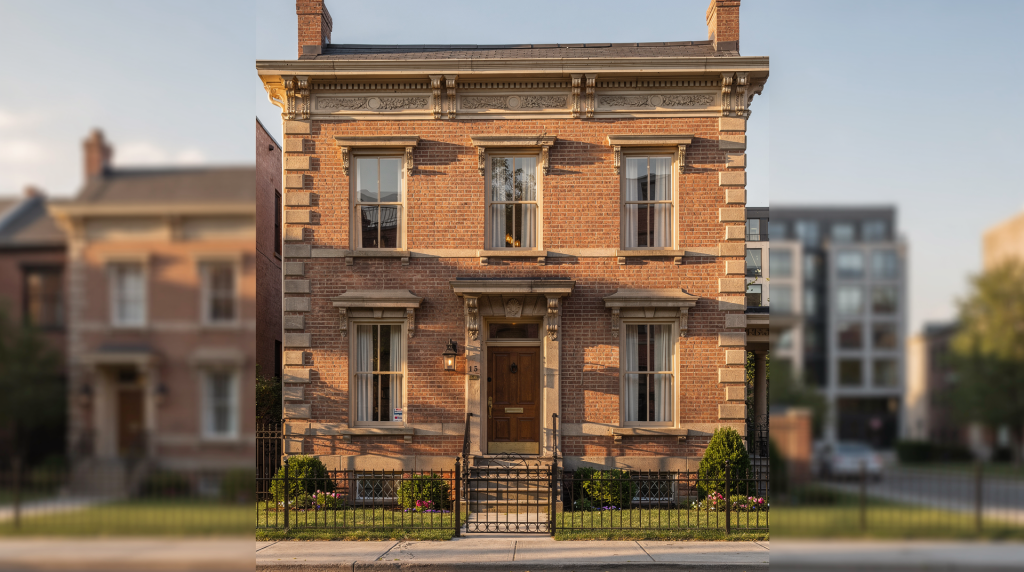
A historic property earns its case for preservation when it still holds the physical evidence, the hand of the maker, and the story that root it firmly in a particular time and place. After fifteen years of walking through old buildings—some barely standing, others meticulously kept—I’ve learned that the strongest candidates are never just old. They are the ones where significance, integrity, and a workable plan for ongoing care converge. Without that convergence, you’re left with either a museum piece nobody can afford to maintain or a shell that has lost its ability to speak.
Why some buildings matter more than others
Age on its own is a weak argument for preservation. I’ve inspected plenty of nineteenth-century structures that had been so thoroughly gutted and refitted that they offered less historic information than a well-preserved mid-twentieth-century ranch house down the street. What separates a building worth saving from one that is simply old is historical significance combined with enough intact fabric to demonstrate why that significance exists.
A building usually clears the threshold when it does at least one of the following well:
- It has a documented association with people, events, or patterns of local history that mattered.
- It embodies a recognizable architectural style, a distinct construction method, or the material culture of a particular period.
- It retains original materials, workmanship, and the spatial relationships that defined how people moved through and used the building.
- It helps tell the story of a neighborhood, a community, or an industry that shaped the area.
- It possesses rarity, a quality of uniqueness, or a strong local identity that would be impossible to recover once lost.
Notice that none of these criteria require a building to be beautiful or grand. Some of the most significant properties I’ve documented were stubbornly plain. Their value lay in what they recorded: the dimensions of a worker’s cottage, the tool marks on a vernacular barn frame, the way a corner storefront anchored a block for a century.
The three questions that matter most
When I’m asked to assess whether a property is worth the effort—and the expense—of preservation, I return to three questions. They cut through sentiment and force a clear-eyed look at what the building actually is and what it can realistically become.
1) Is it historically significant?
Significance is the reason the property deserves attention in the first place. It can stem from architecture, engineering, cultural associations, a connection to a person or event, or the building’s role within a broader historic context. A house does not need to be grand to be significant. A modest worker’s cottage, a vernacular farmhouse with asymmetrical additions, or a neighborhood storefront with a pressed-tin ceiling can matter enormously because it shows how ordinary people lived, built, and adapted over generations. I’ve seen a row of unremarkable-looking mill houses tell a more complete story of a town’s industrial past than the ornate mansion of the mill owner ever could.
2) Does it still have integrity?
Integrity is the measure of whether a building still retains enough of its original character to communicate its significance clearly. When I walk through a property, I’m looking at seven aspects that preservation professionals return to again and again:
- Location
- Design
- Setting
- Materials
- Workmanship
- Feeling
- Association
If the building has been heavily altered—original windows replaced with vinyl units, interior walls moved, exterior cladding hidden under synthetic siding, the roof profile changed—it may still be old, but it may no longer express what made it important. I once evaluated a Federal-era farmhouse where every interior surface had been drywalled over and the original staircase removed to open up the floor plan. The shell remained, but the building had been rendered mute. Age was present; integrity was not.
3) Can it be cared for realistically?
Preservation is not an act of sentiment. It is a commitment to ongoing maintenance, repair, and, when necessary, adaptation that does not destroy the features carrying the building’s significance. The best candidate is one where the numbers work—not necessarily easily, but plausibly.
That means asking practical questions early:
- Can the building be repaired rather than replaced, and do the repairs address the root cause of deterioration, not just the symptom?
- Can a new use fit within the existing footprint and volume without carving out historic fabric or altering the primary elevations?
- Are skilled craftspeople and appropriate materials available within a reasonable distance and budget?
- Does the owner have a maintenance plan that accounts for cyclical tasks—gutter cleaning, masonry repointing, wood element painting—on a schedule measured in seasons, not decades?
I’ve seen too many well-intentioned preservation efforts stall because the initial restoration was funded but the long-term care was never thought through. A building that requires a specialist from three states away for every minor repair is a building at risk.
Character-defining features: what to look for
These are the physical details that usually give a historic property its identity. They are the evidence. If they are gone, the building becomes significantly harder to interpret and much harder to preserve with any fidelity.
| Feature | Why it matters | Common red flags |
|---|---|---|
| Original windows and doors | Shows period design, craftsmanship, and the rhythm of the façade | Replaced with generic modern units that break the original pattern and sightlines |
| Exterior cladding and masonry | Reveals materials, construction methods, and regional building traditions | Hidden under synthetic siding, covered with inappropriate coatings, or patched with mismatched materials |
| Roof form and chimney placement | Helps define the building’s profile, era, and internal spatial logic | Major shape changes, removal of chimneys, or additions that overwhelm the original massing |
| Interior staircases, trim, plaster, and floors | Often hold the strongest evidence of workmanship and the daily life of occupants | Gut-renovated interiors with little original fabric left beyond the studs |
| Site and setting | The surroundings can be part of the history—the relationship to the street, outbuildings, plantings | Severely altered lot, lost context, or a building now isolated from its historic neighbors |
When I document a property, I photograph every one of these features before anything is touched. The photos become the baseline record. They also force me to look slowly, which is when you notice the saw marks on a joist, the ghost of a removed partition on the floorboards, or the way a door casing was pieced together from two different profiles—details that tell you something about the builder and the budget.
Practical test: is preservation worth the effort?
Use this checklist when you’re standing in a building and trying to make a clear-headed decision:
- The building has a clear story or demonstrable architectural value that can be articulated in a sentence or two.
- Enough original fabric remains to support that story without relying on conjecture.
- The most important features can be repaired using established conservation techniques, not just replaced wholesale.
- Future use can fit the building without major loss of character-defining elements or spatial relationships.
- The cost is high, but the cultural, neighborhood, or educational value is demonstrably higher than demolition or replacement.
If you can answer “yes” to most of these, the property is usually a strong preservation candidate. If you’re stuck on the last point, it’s worth remembering that the calculation isn’t purely financial. A preserved historic building can stabilize a block, attract investment, and serve as a tangible record for future generations—benefits that a replacement structure rarely delivers in the same measure.
Common mistakes that lead to bad decisions
- Treating age as the only measure of importance. I’ve seen owners assume that anything built before 1900 is automatically worth saving, while dismissing a 1950s building that was a rare intact example of a regional modern style.
- Overlooking later changes that may themselves be historic. A nineteenth-century house with a 1930s kitchen addition can tell two stories, not one. Removing the later layer can erase evidence of how the building adapted.
- Removing original materials too quickly instead of assessing repair options. Wood windows are the classic example: they are often condemned when they could be rebuilt for less than the cost of a high-quality replacement.
- Assuming a building is beyond saving because it needs work. I’ve walked into properties with collapsed ceilings and standing water that were structurally sound once the debris was cleared and the source of moisture addressed.
- Confusing style with significance. A pretty façade is not the same as historic value. A building can be handsome and still have little to say historically, just as an awkward-looking structure can be irreplaceably significant.
When a property may still be worth preserving even if it is altered
Some historic properties have lost pieces of their original fabric—sometimes significant pieces—but still deserve preservation if their core character remains legible. A building may still matter when it retains:
- Its original form and massing, so that the volume and silhouette read as they did historically.
- Key materials or craftsmanship concentrated in areas that define the primary experience of the building.
- A strong association with a person, place, or event that is well-documented and not dependent on the missing fabric to be understood.
- Enough physical evidence to guide a faithful rehabilitation—a single surviving window can provide the profile for all the replacements; a section of original flooring can establish the species, width, and finish.
The question is not whether the building is perfect. No old building is. The question is whether it still carries enough authentic information to be understood and cared for responsibly. I’ve worked on projects where we had to replace sixty percent of the siding and rebuild entire porch assemblies, but because the form, the window openings, the interior plan, and the roof structure were intact, the building still read clearly as a product of its time.
Step-by-step: how to evaluate a historic property
- Identify the property type and approximate age. Start with the obvious: stylistic clues, construction methods, and any date stones or plaques.
- Research its history, ownership, and original use. Deeds, city directories, Sanborn maps, and local historical societies are your primary sources.
- Note the features that appear original or early. Document them with photographs and measured notes before any work begins.
- Compare current conditions with historic photos, deeds, maps, or local records. Look for what has changed—and when.
- Separate repairable damage from irreversible loss. A sagging floor may be a joist issue; a missing original stair is a different order of problem.
- Ask what change is necessary for the building’s continued use and what change is avoidable. Be honest about the distinction.
- Decide whether the property still conveys its significance clearly. If you have to explain too much, the integrity may be too compromised.
Preservation vs. replacement: the real decision
Replacement is often easier in the short term. It’s faster, the warranties are familiar, and the contractors are easy to find. But preservation can offer better long-term value when a building still has its important features. Historic properties hold craftsmanship, material quality, and local memory that new construction cannot replicate. The dense grain of old-growth timber, the character of hand-thrown brick, the way a stair tread wears under a century of footsteps—these are not details you can specify in a new build.
That said, not every old structure should be saved at any cost. A responsible decision balances significance, integrity, condition, and feasibility. I’ve recommended documentation and selective salvage for buildings that were too far gone to preserve meaningfully, and I’ve fought hard for others that looked terrible on first glance but had a solid frame and an important story. Each case demands its own evidence.
Bottom line
A historic property is worth preserving when it still has a defensible historical or architectural significance, enough integrity to express that significance without requiring a narrative crutch, and a realistic plan for careful repair or reuse that accounts for the long term. The best preservation candidates are not just old buildings. They are buildings that still teach us something through their materials, their workmanship, and their place in history. They are the ones where you can stand in a room and feel the intelligence of the original builder, the adaptations of successive owners, and the quiet continuity of a structure that has outlasted everyone who ever called it home.
FAQ
How old does a property need to be to be considered historic?
A common benchmark is 50 years or older, which is the threshold many review boards and registers use. But age alone does not make a property historic; significance and integrity still matter. I’ve evaluated 40-year-old buildings that were already significant for their architectural innovation, and 150-year-old buildings that had lost too much fabric to qualify.
Can a heavily altered building still be worth preserving?
Yes, if it retains enough original form, materials, or historical association to communicate its importance clearly. The key is whether the alterations are reversible or whether they have permanently erased the evidence. A building with replaced siding but intact windows, interior plan, and roof structure is in a very different position than one that has been gutted to the studs and expanded beyond recognition.
What is the most important preservation factor?
Integrity is often the deciding factor because it shows whether the building still visibly carries its significance. You can have a building with a remarkable history, but if the physical fabric that testified to that history is gone, the argument for preservation becomes abstract and much harder to sustain.
Is community value part of historic significance?
Yes. A property can matter because of its neighborhood role, its place in local memory, or its connection to community identity. A corner store that served as an informal community center, a church that hosted civil rights meetings, a school that educated generations of a neighborhood—these buildings carry significance that may not be architectural but is deeply historical.
Should every historic property be restored?
No. Some should be preserved as they are, with minimal intervention. Some should be rehabilitated for a new use while retaining key features. And some should be thoroughly documented before major change or demolition, so that the record survives even if the building cannot. The right treatment depends on significance, condition, documentation, and the realistic demands of future use.