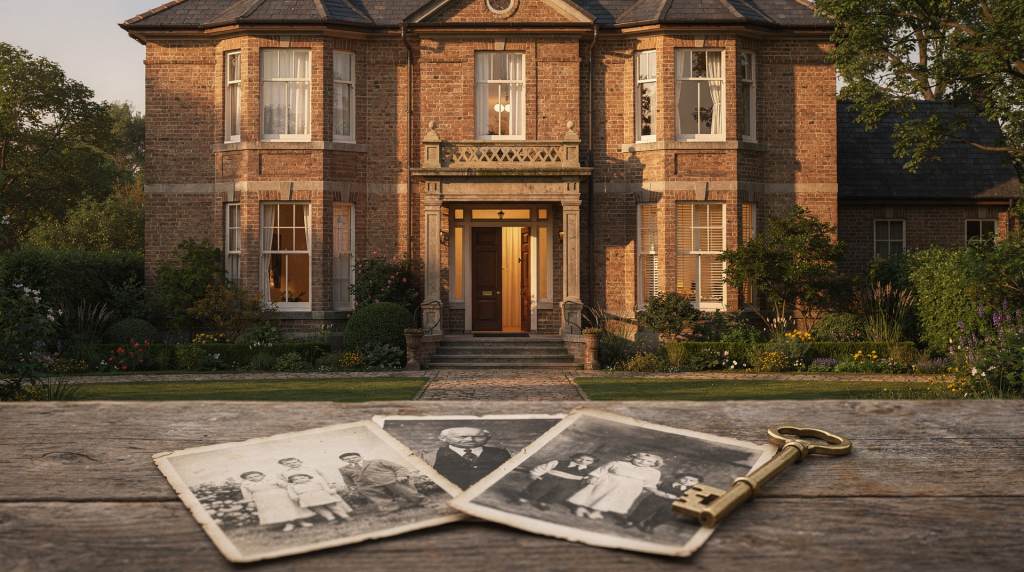
Historic houses are not just old structures with good bones. Their ownership stories explain how a building changed, survived, and stayed meaningful across generations. For owners, buyers, and preservation-minded readers, that history is often the difference between treating a house as a commodity and understanding it as a living record of craftsmanship, use, and care.
Introduction
When people ask where a historic house “came from,” they usually want more than a date or a famous name. They want context: who built it, who altered it, who neglected it, and who saved it. That chain of ownership reveals the practical life of the building, and it often guides the next right decision for repair, restoration, or use.
I’ve spent years tracing these stories through county deed rooms, attic framing, and layers of wallpaper, and I can tell you this: the ownership narrative is the most underused diagnostic tool in preservation. It’s not filler content. It’s the thread that connects a sagging porch beam to a specific family’s financial hardship in 1903, or a mismatched window sash to a hasty repair after a storm in 1947. For a historic-property site, these stories are one of the clearest ways to help readers understand why a house matters and what responsibilities come with it.
What an ownership story really tells you
An ownership story is not just a list of names from a deed search. It is a timeline of decisions that shaped the house—decisions made by people who were working with the budgets, materials, and priorities of their moment. When you read a deed transfer from 1872, you’re not just seeing a name; you’re seeing the moment a house passed from a farmer who built the original four-room core to a merchant who added the front parlor and the Italianate brackets. That addition isn’t random ornament. It’s a statement about aspiration and changing economic status, and it’s legible in the trim profiles if you know what to look for.
It can show:
- when the house was built or substantially altered
- which additions were made and why
- how the property was used by different households
- when maintenance was deferred or materials were replaced
- whether the building stayed intact or lost key features
- how social history connects to the physical fabric of the house
In practice, a good ownership story helps answer a simple question: what happened to this house over time, and why does it look the way it does now? I’ve walked into houses where the owner assumed a strange jog in the hallway was a quirky original feature, only to find through deed research that it was the scar of a partition wall added when the house was briefly divided into apartments during the 1930s. That knowledge changes how you value the feature—and whether you keep it.
Why these stories matter to owners
Historic house owners often need more than style labels and preservation slogans. They need usable information—the kind that prevents expensive mistakes and guides decisions when a contractor says, “We should just rip all this out and start fresh.”
Ownership stories help owners:
- identify original and non-original elements
- spot later repairs that may be historically significant in their own right
- understand why certain materials fail or survive
- make better choices during restoration
- avoid “restoring away” important evidence of age and use
A house that has been altered by five families over 120 years will usually need a different approach than a house that survived mostly unchanged. I’ve seen owners strip out 1920s kitchen cabinetry because it wasn’t “original” to their 1880s house, not realizing that those cabinets represented a significant modernization campaign by the family who owned the house longest—and that the cabinets themselves were rare examples of early built-in millwork. Without the story, owners may over-rebuild, over-strip, or replace features that should have been conserved. The ownership timeline gives you permission to be thoughtful rather than purist.
Why these stories matter to preservation work
Preservation is not only about saving old material. It is about knowing what is worth saving and why. I’ve reviewed too many preservation plans that treated a building as a frozen artifact from a single construction date, ignoring the layers that made it significant. Ownership history grounds those decisions in evidence rather than assumption.
Ownership history supports preservation in several practical ways:
1. It helps establish significance
A building may be important because of its architecture, but also because of the people who lived there, the work that was done there, or the role it played in a neighborhood’s development. A modest worker’s cottage might not be architecturally distinguished, but if the ownership chain reveals it was home to three generations of millworkers who shaped the local labor movement, that changes the significance calculation entirely.
2. It clarifies what is original, early, or later
This matters for everything from trim profiles to sash windows to interior room layouts. The history of ownership often explains why a feature was added and whether it should be retained. When you can date a rear addition to the exact year the household size doubled—because the census shows six children and the deed shows a construction loan—you’re no longer guessing about its significance.
3. It gives context for condition
A cracked plaster wall, patched foundation, or replaced porch may reflect decades of use, not a single renovation. Ownership stories help separate normal aging from damaging intervention. I once investigated a house where the foundation had a pronounced bulge that looked alarming. The ownership timeline showed the house had been moved thirty feet in 1911 to accommodate a street widening, and the bulge was a stable artifact of that relocation—not an active structural failure.
4. It strengthens grant, designation, and planning narratives
If a house is being considered for local recognition, a preservation easement, or tax-related work, the story of who owned it and how it evolved can support a stronger case. Review boards respond to documented evidence, not sentimental appeals. A well-researched ownership history turns a generic “old house” into a specific, defensible cultural resource.
The difference between a sales listing and a house history
A sales listing tells readers what the house is now. A house history tells them how it became that way. I’ve watched buyers walk away from houses because they didn’t understand the significance of what they were seeing—and I’ve watched others overpay for features that weren’t as old as they assumed. The difference is almost always a lack of documented history.
| Sales Listing Focus | House History Focus |
|---|---|
| Bedrooms, baths, square footage | Construction phases, ownership chain, and alterations |
| Current finishes and staging | Original materials, surviving details, and evidence of change |
| Asking price and market appeal | Historical context and architectural significance |
| Immediate buyer interest | Long-term stewardship and preservation value |
| Present condition only | Condition plus historical evolution |
This is why adding a House History section to each listing is so effective. It turns a transaction page into a useful reference that serves the owner long after the sale closes. It also attracts the kind of buyer who is looking for stewardship, not just square footage—and those buyers tend to take better care of the house.
What makes a strong house history section
A useful house history should be readable, factual, and grounded in evidence. It does not need to be academic to be serious. The best ones I’ve read feel like a concise briefing from someone who has actually walked through the house with a flashlight and a notebook, not someone who just ran a title search and called it done.
Include these elements:
- approximate construction date
- architectural style or type
- known builders, early owners, or major occupants
- major alterations and approximate dates
- sources used, such as deeds, maps, newspapers, city directories, or oral history
- any preservation milestones, restorations, or threats
Keep the tone clear. Readers should understand what is known, what is inferred, and what still needs research. A phrase like “the house appears to have been expanded around 1895, based on the change in foundation stone and a building permit issued to the second owner” tells the reader exactly how confident they can be in that date. That honesty builds trust.
How to research an ownership story
You do not need every deed ever recorded to create a valuable history. You need a practical research path that starts with the physical building and works outward to the paper record. The house itself is your primary source—it will tell you where to dig in the archives.
Step 1: Start with the house itself
Look at the building before you look at the records. I spend hours on this step, and it pays off every time. The physical evidence narrows your research questions from “what happened here?” to “when did that rear ell get added, and why does the framing switch from hand-hewn to circular-sawn at that point?”
Check for:
- changes in rooflines
- additions with different framing or materials
- mismatched window patterns
- patched foundations
- reused trim or doors
- interior clues like blocked openings or shifted floor levels
The house often tells you where to look in the archives. A change in floorboard width at a specific point in the hallway might mark the original rear wall of the house, which means you now know to look for a building permit or tax record showing an increase in assessed value around the time that addition was built.
Step 2: Gather the basic paper trail
Useful sources include:
- property deeds
- tax records
- census records
- city directories
- historic maps
- building permits
- probate files
- newspapers
- photographs
- local oral histories
These records rarely tell the full story alone, but together they can show ownership changes, household size, use patterns, and major alterations. A tax record showing a jump in assessed value from one year to the next is often the best evidence you’ll find for a major addition. A city directory listing a different occupation for the head of household might explain why a front room was converted to a shop. These are the details that turn a list of names into a narrative.
Step 3: Build a timeline
Put the evidence in chronological order. This is where the story starts to take shape, and where gaps become obvious. A timeline forces you to confront what you don’t know, which is just as important as what you do know.
A simple timeline might include:
- construction era
- first confirmed owner
- major addition or renovation
- period of vacancy or subdivision
- restoration campaign
- current stewardship
This timeline is the backbone of the published story. It’s also the document you’ll return to when new evidence surfaces—and it always does, eventually.
Step 4: Verify before you publish
Historic-house stories are often repeated from one site to another until they become “fact.” That is risky. I’ve seen the same incorrect construction date appear on five different websites, all citing each other in a circular loop of misinformation. Breaking that chain requires checking primary sources.
Check:
- whether dates are estimated or documented
- whether family legend is supported by records
- whether a renovation story matches physical evidence
- whether ownership and occupancy are being confused
If a detail cannot be confirmed, say so clearly. A statement like “local tradition holds that the house was a stop on the Underground Railroad, but no documentary evidence has been found to confirm this” is honest and leaves the door open for future research. It also prevents the story from hardening into a myth that distorts the actual history.
Common mistakes to avoid
Historic-house storytelling fails when it becomes romantic, vague, or overconfident. I’ve read too many histories that read like a novel when they should read like a careful investigation. The house doesn’t need you to invent drama; it already has a real story, and that story is more compelling than anything you could make up.
Avoid these problems:
- treating oral history as the only source
- claiming a house was “originally built in 18xx” without evidence
- ignoring later owners because they seem less interesting
- calling every old change a “restoration”
- assuming age equals significance
- writing as if the house has one perfect historical moment
A house is usually more interesting when its changes are acknowledged honestly. The 1950s kitchen remodel, the 1970s aluminum siding, the awkward bathroom added in what used to be a pantry—these are all part of the building’s biography. You don’t have to love every chapter, but you should understand them before you decide what to keep and what to undo.
A practical framework for telling the story
A strong ownership story usually answers four questions. These questions work for a quick listing sidebar or a full-length research article, and they keep the narrative grounded in evidence rather than speculation.
1. Who built or first occupied the house?
2. How did ownership change over time?
3. What physical changes followed those changes in ownership?
4. Why does that history matter now?
That structure works well for listing pages, editorial articles, and case studies. It forces you to connect people to physical evidence, which is where the real insights emerge.
Example structure for a listing page
- Overview
- Architectural background
- Ownership timeline
- Major alterations
- Preservation notes
- Sources and further reading
Example structure for a journal article
- Why the house matters
- What the records show
- What the building fabric confirms
- What was lost, saved, or restored
- What owners can learn from it
How ownership stories support better restoration decisions
A restoration that ignores ownership history can erase the very features that make a house worth saving. I’ve walked through houses where a well-intentioned owner stripped every room back to the “original” period, only to discover later that they had removed the only surviving evidence of a significant later chapter—a chapter that was actually more historically rare than the original fabric they preserved.
Ownership stories help guide decisions such as:
- whether to repair or replace windows
- whether a porch is historically appropriate
- which wall finishes should be preserved
- whether a later kitchen addition has its own value
- how aggressively to return a house to an earlier period
Not every historic house needs to be frozen in one date. Sometimes the best outcome is a thoughtful repair that respects multiple periods of use. A house that evolved over 150 years should look like it evolved over 150 years. The ownership story gives you the confidence to make that call, because you understand what each layer represents and why it matters.
Content strategy: why this matters for a historic-house site
For a site like Mill River Steeple, ownership stories do more than enrich listings. They support a better editorial model—one that serves readers long after a property sells and builds authority in a field where authority is earned through accuracy and depth.
That means:
- keeping listings as the entry point
- adding house history as a permanent reference layer
- linking listings to related journal content
- grouping articles by building type and period
- publishing restoration case studies and owner interviews
- building a resource library for maintenance and preservation basics
This approach shifts the site from a sales-first directory to a trusted historic-property magazine. That is a stronger long-term model because it serves owners, researchers, and enthusiasts even when a listing is no longer active. The listing might expire, but the house history remains useful—and it brings people back to the site for reasons that have nothing to do with buying or selling.
Checklist: what to include in a house ownership story
- Construction date or best estimated range
- Architectural style or house type
- Early owners and occupants
- Major changes in ownership
- Major additions, removals, or alterations
- Evidence from the house itself
- Key records consulted
- Preservation challenges or successes
- Current status and stewardship
FAQ
Why do historic house ownership stories matter?
They explain how a house changed over time and help owners make better preservation and restoration decisions. Without them, you’re working blind—making choices based on style preferences or contractor convenience rather than evidence.
Is a deed chain enough to tell the story?
No. Deeds are important, but they should be combined with physical evidence, photographs, directories, maps, and other records. A deed tells you who owned the house, but it rarely tells you what they did to it. For that, you need to cross-reference the paper trail with the building itself.
What if the ownership history is incomplete?
Publish what can be verified and clearly label gaps, estimates, and family lore. An incomplete history that’s honest about its limits is more valuable than a complete fiction. It also invites others to contribute missing pieces.
Should later owners be included?
Yes. Later owners often made changes that are essential to understanding the building’s present condition and significance. Ignoring them because they’re less “historic” is a mistake—their decisions are part of the house’s biography, and sometimes those decisions are the most instructive for current stewardship.
How long should a house history be?
As long as needed to be useful. For a listing, a concise timeline may be enough. For a feature story or case study, the history can be much more detailed. The length should be determined by the complexity of the building’s story and the available evidence, not by an arbitrary word count.
Conclusion
Historic house ownership stories matter because they connect the building’s physical fabric to the people and decisions that shaped it. They help readers understand significance, guide owners toward better repairs, and give preservation work a foundation that is both practical and honest. When you know that the wide-plank floor in the kitchen was laid by the second owner in 1842 using timber from the property’s own woodlot, you’re not just looking at a floor—you’re looking at a specific decision made by a specific person with specific resources. That knowledge changes how you treat the floor, and it changes how you feel about the house.
A house becomes easier to care for when its story is known. The research takes time, but it pays back that time in better decisions, fewer regrets, and a deeper connection to the building you’re responsible for. That’s not sentimentality. That’s good stewardship.